
[What I worked on—]
Product Strategy
Product Design
UX Research
Design System
[Role—]
I partnered with designers from Ziba before transforming into a UX Team of One. I led the product, design, and strategy in a team of 150.
In a world where FedEx's constantly changing workforce must be able to quickly and accurately deliver and pickup crucial packages for its customers, Logistics Enhancing Operations (LEO) makes it easy for couriers to navigate its complex workflows & onboard with minimal training.
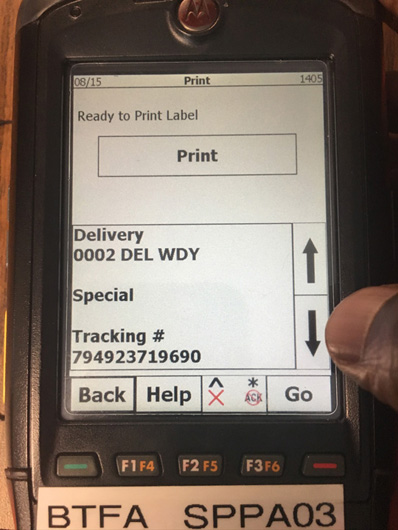
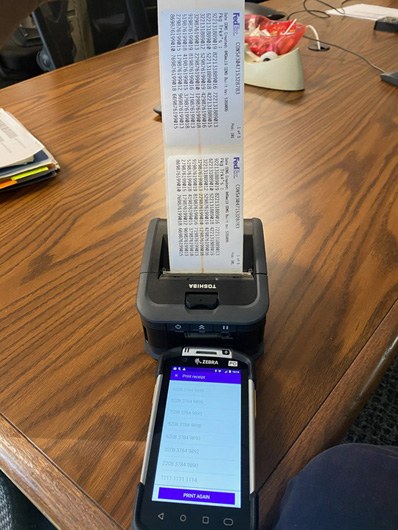
Have you recently signed a package from a FedEx Express courier? Seen that screen where you signed your signature on the device [that replaced the courier's old daily driver tool, the PowerPad?] Well, I did that! Alongside its design system too!
What Was The Problem? [And Why Should You Care?]
The current logistics marketplace is always seeing new opportunities to disrupt and get ahead of its competition.
FedEx Express was in need to revitalize aging systems hindering its own innovation efforts and focus on user centered design as a standard.
The once-innovative PowerPad device, released back in 2002, was growing more foreign to younger & short term employee hires.
FedEx needed a replacement hardware and software solution for their package handling employees that was consistent across its stations worldwide.
[Stats For Nerds] & Impact
2017 - 2024
Year
Android
Platform
150
Team Members
Sketch App → Figma
Tool
85K+
Couriers
100%
Station Adoption Rate
220+
Countries Served
[How it operated.]
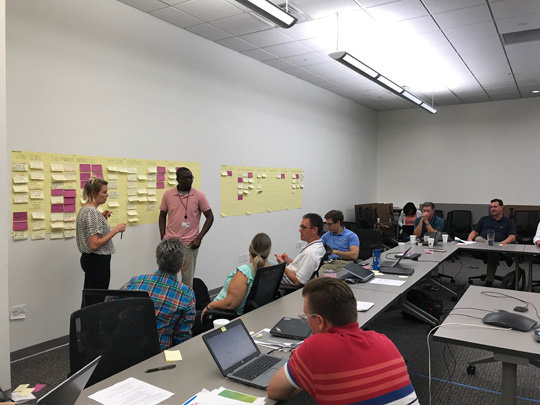
During 2017, I was the sole onsite designer of LEO working together with PM & Engineering Leads and working alongside with 8 Product Owners who were ex-couriers and ex-PowerPad designers.
We started as a team of 6 designers in collaboration with the design firm, and I was leading the interaction, user research of couriers through check rides, and iteration and documentation of the design system.
In 2019, the design team reduced and I became a UX Team of One, and I took the lead of the design vision and direction until a reduction of force in 2024.
Why was LEO needed? [PowerPad wielded many challenges...]
LEO is the daily driver tool that couriers depend on to scan, deliver, and pickup time-definite packages to customers. Couriers are the lifeblood of the company who were becoming increasingly frustrated with using PowerPad!
If the courier fails to do their job on time, the business is greatly affected from customer dissatisfaction and may pull their money elsewhere to competitors.
If the courier can't reliably do this job, then customers who depend on them to arrive on time with the correct packages will be disappointed, frustrated, and possibly even life-threatened.
User Courier Driven Research [Learn From Their Stories]
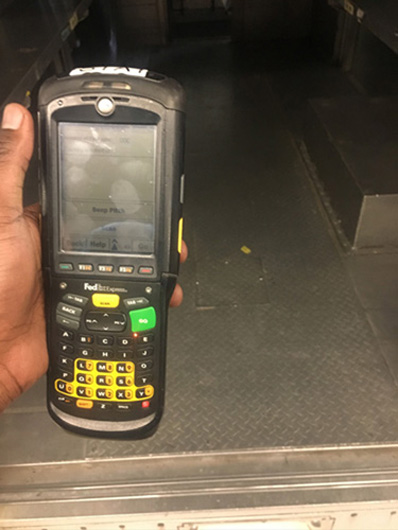
In order to discover the problems with PowerPad, I dove into the Day in the Life of a Courier and understanding how they used PowerPad to deliver and pick up packages.
For example, the workday of a courier who delivers packages all day inside high-rise buildings in New York City is vastly different compared to one who picks up packages from homes and small businesses throughout the rural Arkansas.
I rode along with many couriers with various prototypes and LEO iterations to compare them with how they worked with PowerPad, and we conducted many interviews and surveys from couriers in different parts of the world.
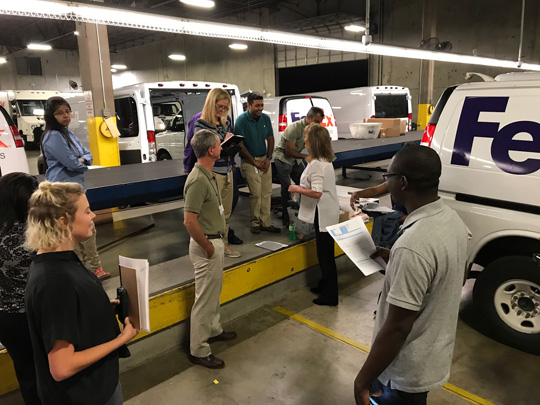
"Is this what you expected?"
This is what I think the most important question to ask when doing user research to get some interesting stories in feedback.
This allowed me to understand more about a courier's proficiency with FedEx's business practices and their personal experience with technology. How can we transform a legacy device into an experience that feels familiar to them so they feel confident and empowered to do their job? Does this user flow or interaction guide the courier to complete their daily task more effectively?
Bridging the Gap Between Design & Engineering [Yay, design systems]
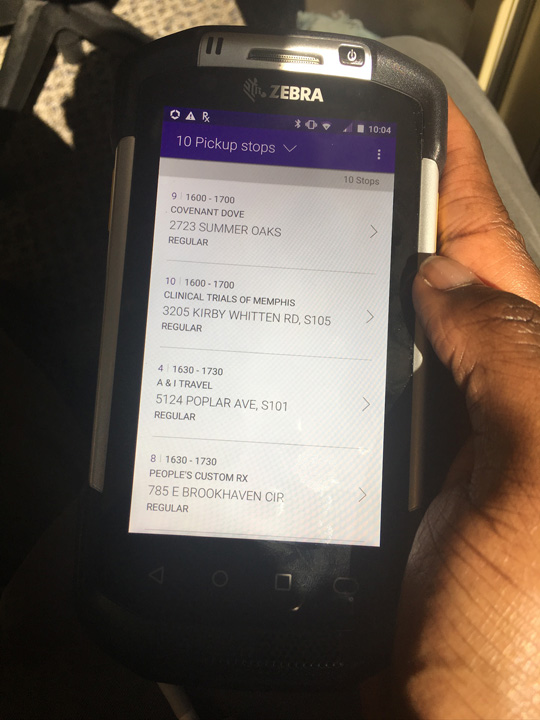
I was placed into the position of being the most exposed to the business and product owners while collaborating with this design firm to migrate these courier workflows to a new device.
This was a monumental task since FedEx has a myriad of various backend systems, legacy business flows, and couriers who fulfill countless different operation pressures within the company.
I firmly believe in having strong foundations and fundamentals on anything made so it can be built to last. I focused on heavy communication and collaboration for full adoption between product, engineering, and the business.
1 of 11 Apps Workflow Demo [Show & Tell]
5 Lessons Learned [Pause and reflect]
My 7 year journey working on this design system with the support of some amazing talented designers into transitioning as a UX Team of One has been incredible.
LEO's complexity is that I must take on the role of many hats: from being a cross-system interpreter and communicator between numerous FedEx systems internationally to being a package scanner, a Dispatch messaging service, a timecard manager, and more causes a frustrated courier to blame and dismiss the LEO device when something goes wrong.
It is not “Oh, this service is down at this time.” but instead “Oh, LEO sucks because it is not helping me right here, right now.” due to it being taking on that role throughout the company as the single source of truth.
[There is a lot of herding cats to make a massive enterprise product work.]

I think the best way to tie a bow on this project into some key takeaways:
Lesson #1
The design of your product must be adaptable and be prepared to account for many unforeseen scenarios where couriers rely on you and your team’s design craft.
Lesson #2
FedEx is a unique company where it has many diverse people who want to put their hands in the cookie jar and influence the product. Learn how to say no, or your team would bite off more than what they could chew.
Lesson #3
Good design is good communication! Storytelling is the most important skill we need to improve as product designers. When something ignites from an oversight released onto the field, the team morale may grow into panic. It took a lot of personal growth and practice to build my skills on storytelling and give out effective presentations to break down information.
Lesson #4
Continuously listen to your users to create a great product. At FedEx, courier trust is critical, and if they do not feel like your tool would solve their problem in the immediate, then your team would know.
Lesson #5
Design system migration is very tricky, but achievable, especially with minimal resources like from being in a UX Team of One. It is important to have a foundation and a plan.
Want to work together? Reach out for work, collaborations, or for a tea chat through LinkedIn.
Copyright © 2026 by Demetruis. Available for full-time or project-based work — remote or on-site (ready to relocate).
Demetruis is pronounced /deh-MEE-true-UHS/.
